HVAC Fundamentals
Bosch Home Comfort Group manufactures heating, ventilation and air conditioning (HVAC) systems.
HVAC Systems Explained

As can be seen in the figure above, an HVAC system consists of one or more sources of thermal energy (heat source) and a number of so-called heat circuits, which transfer the thermal energy to the environment. The most common types of heat sources are boilers (powered by either gas or oil) as well as heat pumps, both of which transfer heat using radiators or underfloor heating.
Additionally, environmental sensors such as an outdoor temperature sensor or a virtual online equivalent are used. The outdoor temperature is required for Weather Dependent Control (WDC).
Boilers Explained
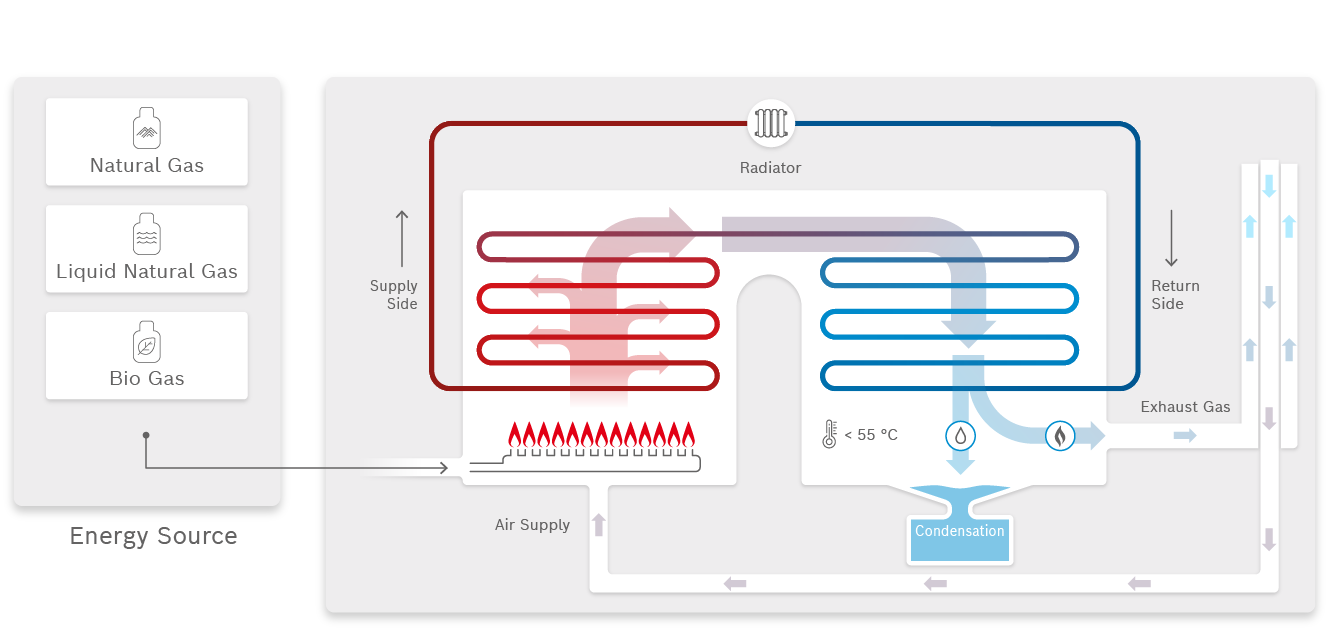
Like system types, boilers also differ by fuel type which can either be gas or oil. The corresponding fuel is burned in the unit, under supply of fresh air, and generates heat for house heating as well as hot water.
Heat Pumps Explained
A heat pump takes the available heat from the ground or air surrounding a property and reuses it for central heating or domestic hot water supply.
Compressor
The compressor is an essential component of a heat pump. It compresses the refrigerant, which increases its temperature. The compressor is typically located in the outdoor unit. The refrigerant is then pumped through the system to the indoor unit. It is important to note that compressors can vary in type and technology.
E-Heater
In a heat pump, the primary source of heating is the heat extracted from the outdoor air, ground or water source. However, during extremely cold weather conditions or when the heat demand is high, the heat pump may struggle to provide sufficient heat on its own. In such cases, an electric heater, often referred to as an e-heater, can be used to supplement the heat pump's heating capacity. The e-heater is typically located in the indoor unit of the heat pump. It consists of electric heating coils that generate heat when electricity passes through them. It's important to note that using the e-heater for extended periods can be less energy-efficient compared to relying solely on the heat pump. Electric heating is generally more expensive than heat pump heating, as it consumes more electricity. Therefore, the e-heater is typically used as a backup or supplemental heating option when necessary, rather than as the primary heating source.
If you want to learn more about heat pumps, go to this Bosch website for a comprehensive guide on how they work and their benefits.
Internet Gateways Explained

Internet gateways connect HVAC systems with the Bosch servers via the Internet to enable remote monitoring and control. Some gateways also offer additional features, such as presence recognition, weather dependent heating optimization, energy recording in combination with smart thermostats and much more. The ID of the gateway serves as the unique identifier for HVAC systems accessed via the Partner API. This ID can be found on the sticker with the QR code located on the gateway.